
Some links on this page are affiliate links. If you book through them we may earn a commission, at no extra cost to you.
Dates this year
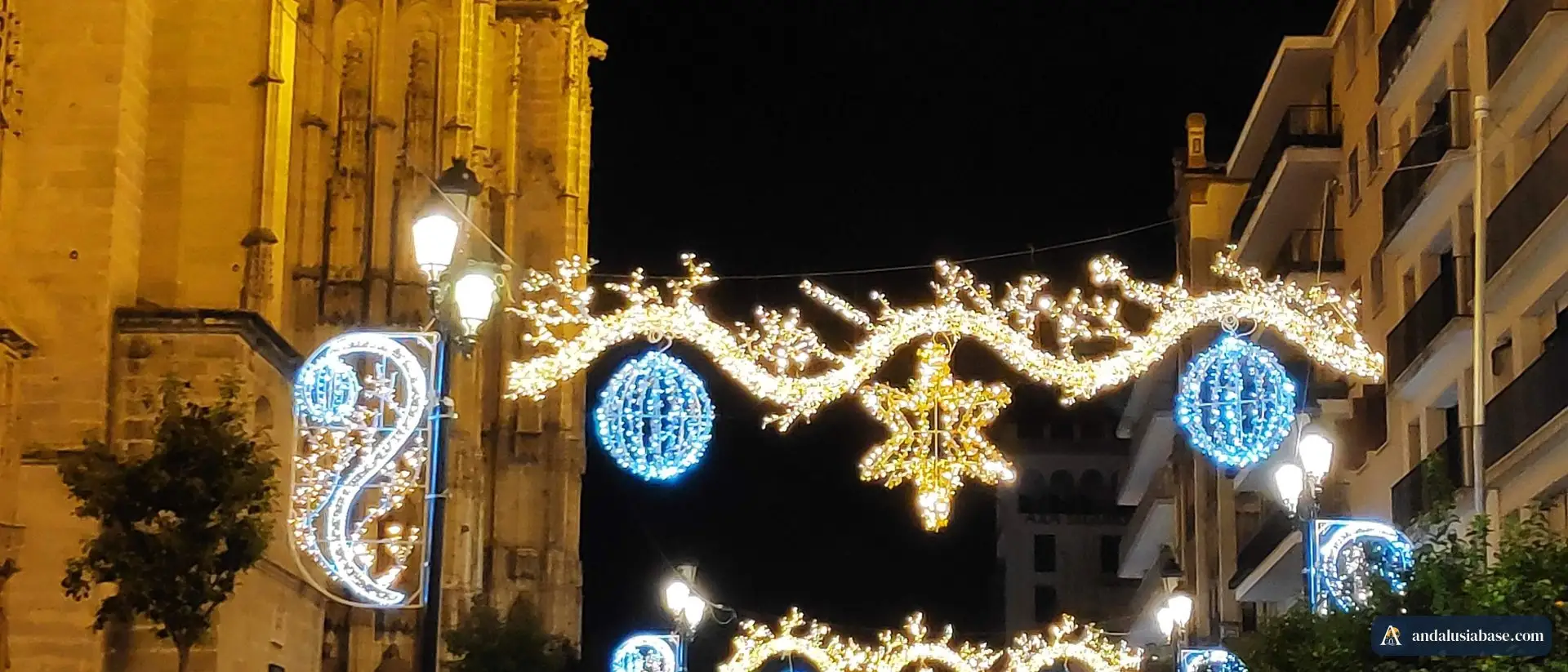
Christmas in Seville 2026 starts when the lights go on, on Friday 27 November at 17:30 on the Avenida de la Constitución, and ends with the Three Kings on 6 January. The lights are on every day from 18:30 to 01:00 until 5 January 2027. The key dates for 2026–2027:
| Date | What happens | Holiday? |
|---|---|---|
| 7 November to 22 December | Feria del Belén, the nativity-figure market by the cathedral | No |
| 27 November (Friday) | The Christmas lights are switched on, 17:30, Avenida de la Constitución | No |
| 6 December (Sunday) | Constitution Day | Moved to Monday 7 December in Andalusia |
| 8 December (Tuesday) | Immaculate Conception, Seville’s great Marian feast | Yes |
| 22 December (Tuesday) | The Christmas lottery draw, El Gordo | No |
| 24 December (Thursday) | Christmas Eve (Nochebuena), family dinner | No, but shops close early |
| 25 December (Friday) | Christmas Day | Yes |
| 31 December (Thursday) | New Year’s Eve (Nochevieja) | No, but shops close early |
| 1 January 2027 (Friday) | New Year’s Day | Yes |
| 5 January 2027 (Tuesday) | Cabalgata de Reyes (Three Kings parade) | No |
| 6 January 2027 (Wednesday) | Epiphany (Día de Reyes), the day children get their presents | Yes |
The craft fair and the convent sweets fair have no fixed date; they are usually confirmed in late November or early December.
Christmas lights 2026: switch-on, hours and streets
The Christmas lights in Seville go on on Friday 27 November 2026. The switch-on starts at 17:30 on the Avenida de la Constitución, by the City Hall, with a concert by the flamenco singer Niña Pastori. It is free, and the avenue fills up early: we recommend arriving by about 16:45.
| 2026–2027 | |
|---|---|
| Switch-on | Friday 27 November, from 17:30 |
| Daily hours | 18:30 to 01:00, every day |
| New Year’s Eve | 18:30 on 31 December to 08:00 on 1 January |
| Last night | Tuesday 5 January 2027 |
| Where | 316 streets and squares across the city |
The main displays are in the centre:
- Avenida de la Constitución: giant light figures inspired by the Giraldillo, the weathervane on top of the Giralda, line the avenue between the Puerta de Jerez and the City Hall.
- Plaza de San Francisco, Calle Sierpes and Calle Tetuán: the classic Christmas shopping streets, with lights strung overhead.
- Palacio de San Telmo: a large light-up nativity scene stands in front of the palace, by the Puerta de Jerez.
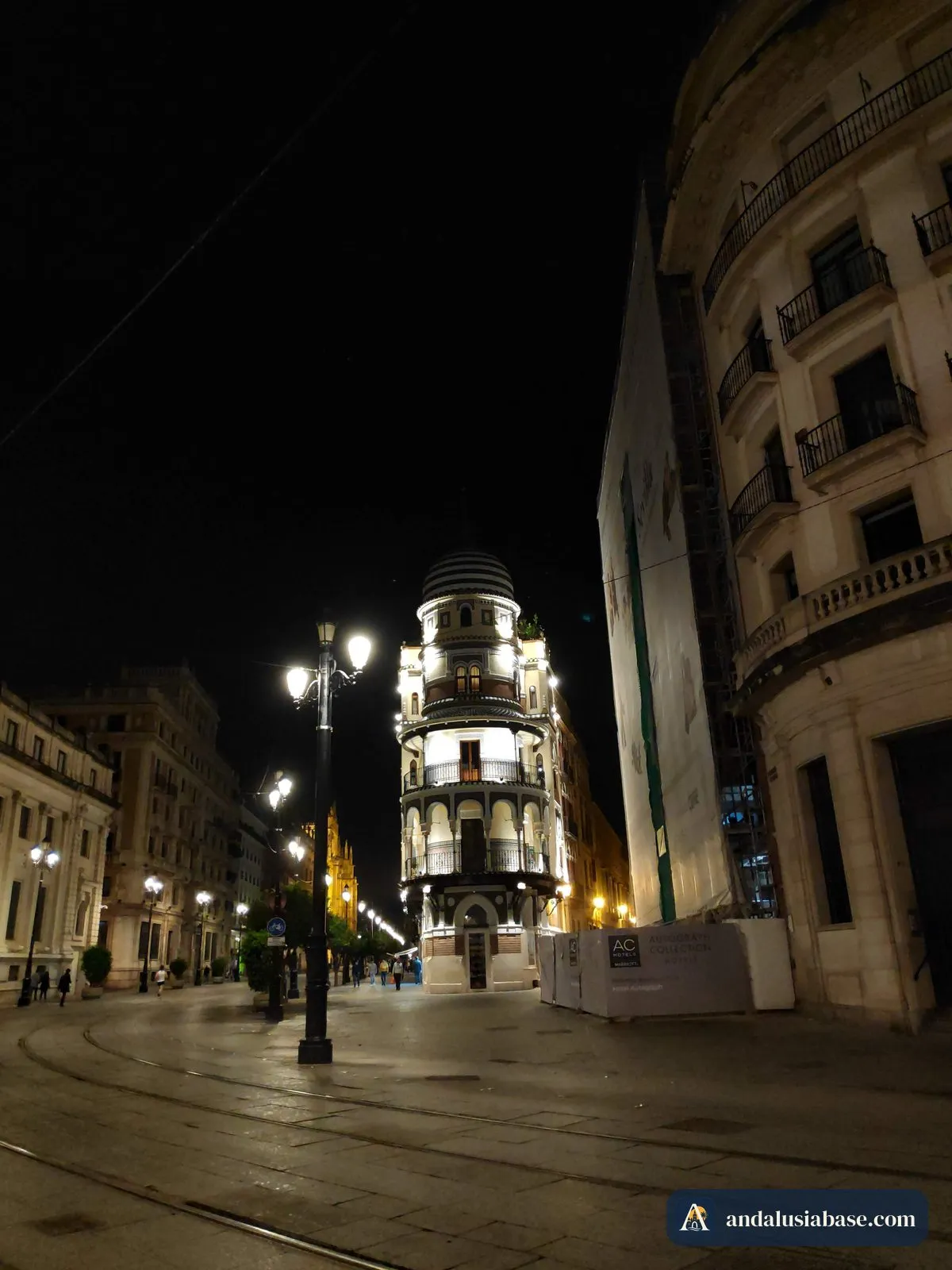
A walk through the lights: start at the light-up nativity scene by San Telmo, walk up the Avenida de la Constitución past the cathedral to the Plaza Nueva and the Plaza de San Francisco, then follow Calle Sierpes or Calle Tetuán to the Plaza del Salvador. It takes about an hour at an easy pace, and the Feria del Belén is on the way. The Metrocentro tram runs along the avenue, so it is easy to start from the Puerta de Jerez stop.
What it is
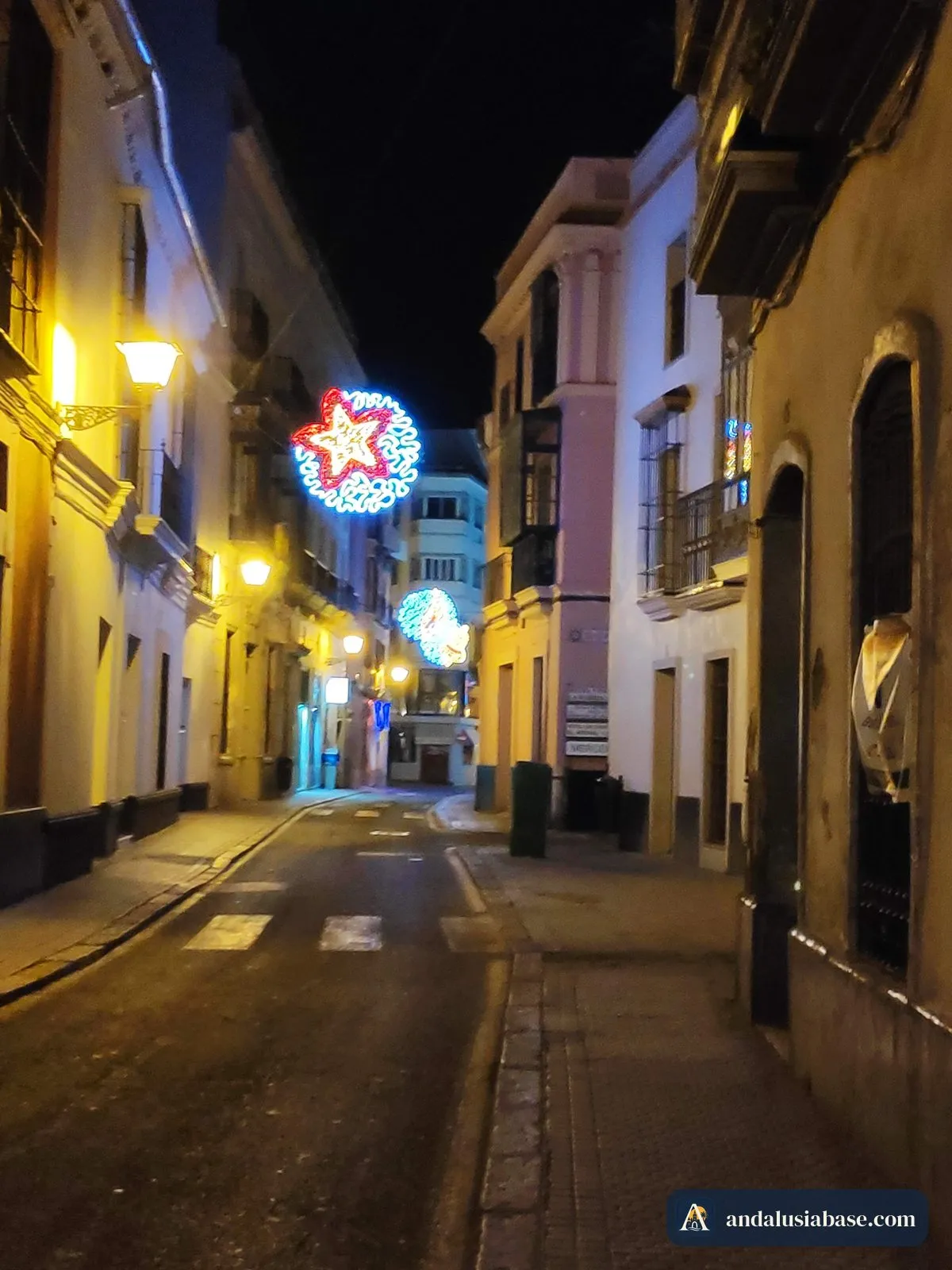
Seville at Christmas is quieter than in spring, and very local. There is no big German-style Christmas market. Instead, the centre fills with lights, stalls selling nativity figures, nativity scenes (belenes) in churches and public buildings, and families out shopping on Calle Tetuán and Calle Sierpes. It is also mild: about 17 °C by day and 7 °C at night, with more sun than most of Europe.
The real celebrations are 24 December and 5–6 January. For Spaniards, the Three Kings matter as much as Christmas Day, and the parade on 5 January is the biggest public event of the season.
Schedule and key days
- 27 November: the lights go on. The city switches on the Christmas lights at 17:30 on the Avenida de la Constitución, with a concert. They stay on every evening until 5 January (see the lights section).
- Early December: convent sweets fair. The Muestra de Dulces de Conventos de Clausura is usually held over a few days in early December, traditionally in the Real Alcázar. Enclosed convents from across the province sell their biscuits, yemas and pastries. Expect queues.
- 7–8 December: the Inmaculada. On the night of the 7th, university tunas (student music groups in capes) sing to the Virgin at the monument to the Immaculate Conception in Plaza del Triunfo, next to the cathedral. Around the feast, the choirboys known as the Seises dance before the high altar of the cathedral, one of only a few times a year.
- All December: markets and nativity scenes (see below).
- 24 December: Nochebuena. Families eat at home. Many bars and restaurants close in the evening, and churches hold midnight mass (Misa del Gallo).
- 31 December: Nochevieja. At midnight, everyone eats twelve grapes, one on each chime of the clock. Seville has no big official gathering; people see in the new year at home or at a dinner, then go out to bars and clubs until dawn.
- 5 January: Cabalgata de Reyes. The Three Kings parade, organised by the Ateneo de Sevilla since 1918, has more than a century of history; in 2027 it starts from the Casino de la Exposición. Floats wind through the centre from the afternoon until late in the evening, and the riders throw sweets to the crowd.
- 6 January: Día de Reyes. Children open their presents, and families share a roscón de Reyes, a ring-shaped cake with a small figure and a bean hidden inside.
Where to watch / how to take part
Christmas markets
- Feria del Belén: the nativity-figure market, with stalls by the cathedral selling clay figures, moss, tiny houses and everything else for a belén. In 2026 it runs from 7 November to 22 December, between the cathedral and the Archivo de Indias, with 12 craft stalls. It is open mornings and afternoons, closing for a few hours at lunchtime.
- Christmas craft fair (Feria de Artesanía Creativa): stalls of handmade crafts and gifts. In 2025 it was in the Jardines de Cristina, by the Puerta de Jerez, from 5 December to 5 January.
Nativity scenes (belenes)
Visiting belenes is a Seville family tradition. The city hall, bank foundations such as the Fundación Cajasol on Plaza de San Francisco, brotherhoods and many churches set up large nativity scenes, most of them free. The local nativity association usually publishes a route in December.
Zambombas
A zambomba is a Christmas gathering where people sing villancicos (carols) to flamenco rhythms, accompanied by the friction drum of the same name. They take place in bars, peñas and patios in December, especially in Triana. The most famous zambombas are in Jerez de la Frontera, an hour away by train: see the dates and best days of the Jerez zambombas.
Convent sweets
Besides the fair, you can buy sweets directly from some enclosed convents all year: you ring, put your money on a revolving wooden window (torno) and the nuns send the box back without being seen. The Convento de San Leandro is known for its yemas (egg-yolk sweets). Look out also for polvorones and mantecados from Estepa, a town in Seville province famous for them.
Monuments over the holidays
Opening hours change on 24, 25 and 31 December and on 1 and 6 January. The Real Alcázar closes on 25 December, 1 January and 6 January, and some monuments close early on 24 and 31 December. The cathedral’s visiting hours also change around services. Check before you go, and see our guides to Alcázar tickets and cathedral tickets.
Where to stay and when to book
Christmas is not peak season, and prices in most of December are lower than in spring. The exceptions are the Puente de la Inmaculada (the long weekend around 6–8 December) and New Year’s Eve, when Spanish visitors fill the city. We’d book one to two months ahead for those dates.
We’d stay in the Centro or near the cathedral to walk out among the lights and markets:
- Hotel Inglaterra is on Plaza Nueva itself.
- Hotel Colón Gran Meliá is a few minutes from the Plaza Nueva and the Avenida.
- EME Catedral Mercer faces the cathedral, a short walk from the Feria del Belén.
- Hotel Doña María has a rooftop terrace beside the Giralda, pleasant on sunny winter days.
See areas and hotels for every budget and hotels in the centre for more options.
Etiquette and tips
- Plan meals on 24 and 31 December. Many restaurants close or serve only a set menu. We’d book early, or eat a late lunch.
- Plan 5 January carefully. The parade closes streets across the centre for hours, and taxis are hard to find. We’d choose a spot on the route early, and bring a bag (or an upturned umbrella, as locals do) for the sweets.
- Shops open on some Sundays and holidays in December, but close on 25 December and 1 January. The January sales (rebajas) usually start around 7 January.
- Pack layers. Days are mild and sunny, but nights are cold and many older buildings have little heating.
- Combine it with a day trip. We think winter is a good time for Córdoba or Cádiz, without the summer heat or crowds. See all day trips from Seville.
For the weather and what else is on, see Seville in December, Seville in January and the best time to visit Seville.
FAQ
Is Seville worth visiting at Christmas?
Yes, we think so. It is mild, sunny and less crowded than in spring, with lights, markets and nativity scenes in the centre. Just plan around 24–25 December and 1 January, when a lot closes.
When are the Christmas lights switched on in Seville?
On Friday 27 November 2026, from 17:30 on the Avenida de la Constitución. After that they are on every day from 18:30 to 01:00 until 5 January 2027, and all night on New Year’s Eve.
Is there a Christmas market in Seville?
Yes, two traditional ones: the Feria del Belén (nativity figures) by the cathedral and a Christmas craft fair (in the Jardines de Cristina in 2025). Both are smaller than the Christmas markets of Central Europe.
What is open in Seville on Christmas Day?
Very little: the Alcázar and most shops are closed, and many restaurants too. Churches, some cafés, bars and hotel restaurants stay open. 24 December is a normal morning with an early close.
When is the Three Kings parade in Seville?
On the afternoon and evening of 5 January (a Tuesday in 2027). It crosses the centre for several hours; the route is published a few weeks before.