
Some links on this page are affiliate links. If you book through them we may earn a commission, at no extra cost to you.
The short answer
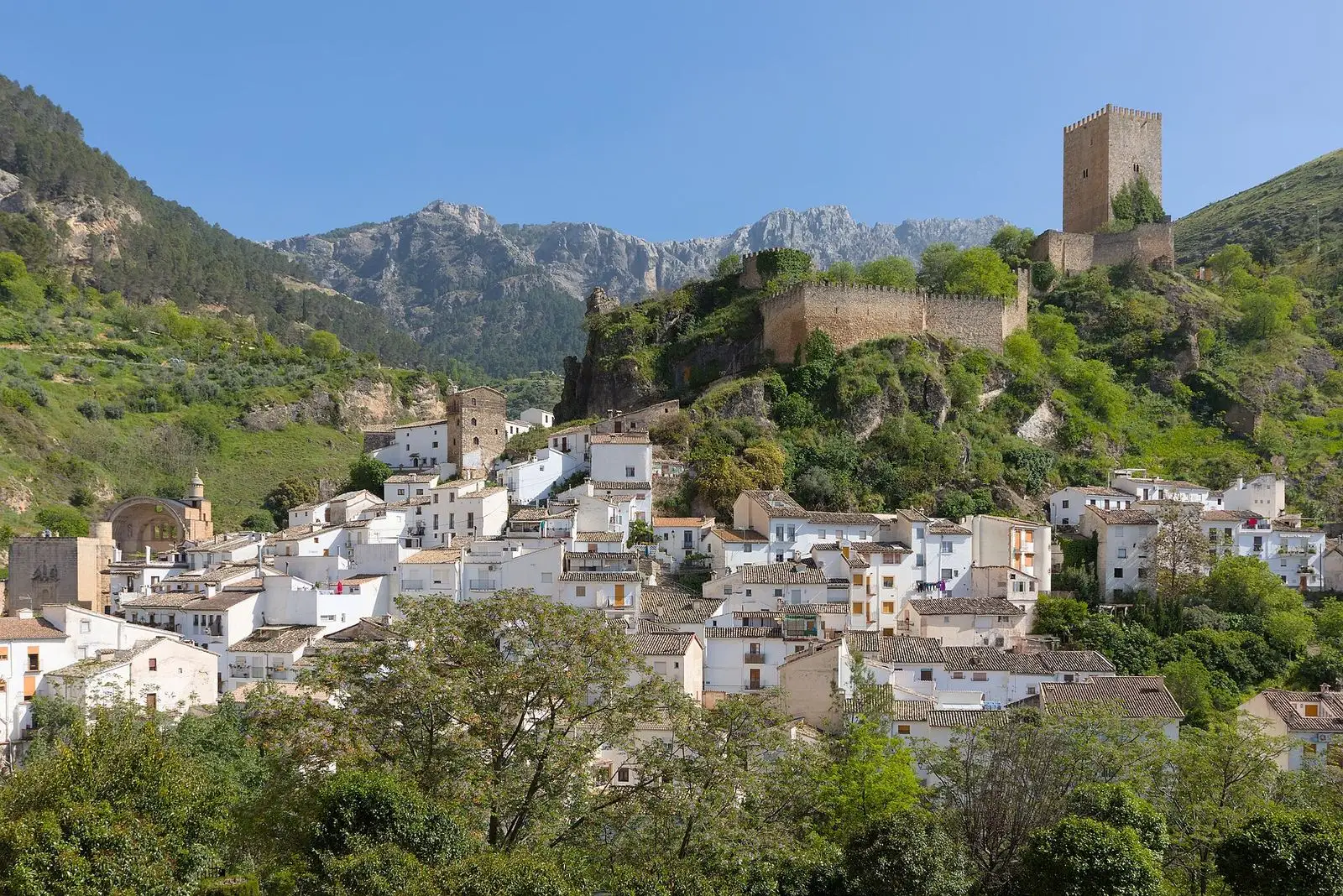
Cazorla is a white town of about 7,000 people on the edge of the Parque Natural de las Sierras de Cazorla, Segura y Las Villas, the largest protected area in Spain (about 210,000 hectares) and a UNESCO Biosphere Reserve. It is in the east of Jaén province, and in our view it is the best base for walking, wildlife and forest scenery in Andalusia.
- Is it worth it? We think so, if you like mountains and quiet. The town is pretty and has a castle and a ruined church, but the park is the reason to come.
- Time needed: two days at least. Allow three nights if you want the Río Borosa, a 4x4 tour and the town.
- Do you need a car? Almost certainly. Distances inside the park are long and there is no regular bus service along the park road.
- Best months: April to June and September to October.
- Check first: most of the Río Borosa trail is closed for bridge repairs. Since 28 October 2026, only about the first 2 km have been open (see below).
Cazorla town
Cazorla climbs a steep hillside under a wall of rock, the Peña de los Halcones. Plan about half a day.
- Castillo de la Yedra: the castle above the town has a climbable keep and houses the Museo de Artes y Costumbres Populares del Alto Guadalquivir. Entry is free for EU citizens (about €1.50 for others) and it is closed on Mondays. Opening hours change with the season, so check them locally.
- Ruinas de Santa María: a roofless 16th-century church built over the river Cerezuelo, never finished. The ruins are free to see; a short guided visit takes you underneath.
- Plaza de Santa María and the viewpoints: the classic photo is the castle against the cliff.
- La Iruela: the next village, with a castle on a rock that you can see from Cazorla.
Parking in the old centre is hard. We’d leave the car on the edge of town and walk up.
The park: what to see
The park is a landscape of limestone mountains, pine forest, gorges and reservoirs. It is home to ibex, red and fallow deer, mouflon, wild boar and griffon vultures. The best wildlife time is dawn and dusk, and in autumn you can hear the red deer rut. The main road through the park is the A-319, past the Parador and the Torre del Vinagre visitor centre. The Río Borosa visitor centre is a separate site, reached by a turning off the A-319.
The source of the Guadalquivir
The Guadalquivir, the river of Córdoba and Seville, begins here, at the Cañada de las Fuentes, as a small spring in a high forest clearing. Reach it by forest track from the A-319. In summer the flow can be very small, so we’d go for the setting, not the water. Deer are often seen around the clearing.
Cerrada de Utrero
Near the source road, the Cerrada de Utrero is a short, easy circular walk of about 2 km (around an hour) along a narrow gorge where the young Guadalquivir runs between limestone walls. Vultures nest on the cliffs. Wooden railings protect the path, which is slippery when wet. We think it is a good option with children or on a day when you do not want a long hike. Walking it needs no permit; canyoning in the gorge does.
Río Borosa
The Río Borosa is the most popular walk in the park: a clear river, wooden walkways, waterfalls and a hydroelectric station from the 1930s. The marked path starts at the Río Borosa visitor centre, next to the fish farm, and follows the river upstream.
Status in November 2026: most of the trail is closed. Storms at the start of 2026 damaged its bridges, and a Junta de Andalucía notice dated 28 October 2026 says that, while they are repaired, only the stretch from the start to the Puente de los Caracolillos is open. The Junta puts that stretch at about 2 km, so for now you cannot walk to the Cerrada de Elías, the power station or the Laguna de Valdeazores. The notice gives no reopening date, so read the latest one on the Junta’s Ventana del Visitante website, or ask at the Torre del Vinagre visitor centre, before you drive out.
These are the stages when the whole path is open:
| Stage | Distance (one way) | Time (return) | Difficulty |
|---|---|---|---|
| Cerrada de Elías gorge | about 4 km | 2-3 h | easy |
| Hydroelectric station | about 7 km | 4-5 h | moderate |
| Laguna de Valdeazores | about 11-12 km | 7-8 h | demanding |
Permits and costs: the Junta lists the Borosa as a marked trail with no quota authorisation. There is a paid car park by the visitor centre. Swimming in the river is not allowed.
On the full route, beyond the power station, the path passes two rock tunnels, so carry a head torch, and climbs to the Salto de los Órganos, a waterfall about 9.5 km from the start (sometimes called the Garganta de los Órganos), and then to the Laguna de Valdeazores, the only permanent natural lake in the park. We’d start early: in peak season the car park fills by about 9:00.
4x4 tours and restricted areas
Some of the highest and wildest parts of the park, such as the Valdeazores lagoons and the upper Borosa valley, are reserve zones where only a few authorised 4x4 vehicles are allowed in each day. Private cars cannot go there. A local company, Servicios Turísticos del Parque Natural de Cazorla, runs the guided 4x4 excursions, which start from Cazorla. Expect prices of about €40 for an adult for a half-day or five-hour tour (the Guadalquivir source, the Borosa valley or Valdeazores), cheaper for children. Tours are small groups with a minimum number of people, so book ahead. You can also look for guided hikes and 4x4 tours in Cazorla.
Where to stay
We’d stay in Cazorla for restaurants and the castle, or at Arroyo Frío, a hamlet in the forest about 10 km from the Río Borosa car park, for early starts.
- Hotel Guadalquivir: a simple, well-run hotel in Cazorla.
- Coto del Valle de Cazorla: in the forest near Arroyo Frío, close to the Río Borosa.
- More options: hotels and rural houses in Cazorla.
There is also a Parador in the park beside the A-319. We’d book well ahead for weekends in spring and autumn.
Úbeda and Baeza nearby
Cazorla combines well with Úbeda and Baeza, the two Renaissance towns that are UNESCO World Heritage Sites, about 45 minutes to an hour away by road. We’d visit them on the way in or out. Our Jaén province guide has the full plan, including a three-day route.
When to go
- Spring (April to June): in our view the best season, with water in the rivers and mild weather.
- Summer: hot in the valleys and busy in August, but the high forest is cooler. The risk of fire can close some tracks.
- Autumn (September to November): fine walking weather, and the red deer rut.
- Winter: cold, with snow on the peaks at times, and storms can close trails.
Getting there and why you need a car
Cazorla is far from the main cities, and the park is bigger than most visitors expect.
| From | By car |
|---|---|
| Úbeda | about 45-50 min |
| Jaén | about 1 h 30 |
| Granada | about 2 h 30 |
| Málaga | about 3 h |
- By car: the practical way. Hire a car in Granada, or see our car hire guide. From Cazorla, allow about 45 minutes to the Torre del Vinagre visitor centre and the Río Borosa, and more to reach the park’s northern end near Segura de la Sierra.
- By bus: a few buses a day reach Cazorla from Jaén and Úbeda, but nothing runs regularly inside the park. Without a car, stay in Cazorla and join a guided walk or 4x4 tour.
For a longer route, see the Andalusia road trip, the best places to visit in Andalusia and our map of Andalusia.
For more walks across the region, see our guide to hiking in Andalusia.
FAQ
Is Cazorla worth visiting?
Yes, for the natural park: gorges, waterfalls, forest and wildlife. The town itself is small but attractive, with a castle and the ruined church of Santa María.
How many days do you need in Cazorla?
Two days covers the town and one long walk. Three nights lets you add a 4x4 tour and the Cerrada de Utrero.
Do you need a permit to hike the Río Borosa?
No quota permit is listed by the Junta de Andalucía for the marked Borosa trail. The restricted reserve zones can only be entered on an authorised guided 4x4 tour. Since 28 October 2026, only about the first 2 km of the trail have been open because of bridge repairs, so check its status before you go.
Can you visit Cazorla without a car?
You can reach the town by bus from Jaén or Úbeda, but the park has no regular public transport. Use a local 4x4 or hiking tour, or hire a car.
Where is the source of the Guadalquivir?
At the Cañada de las Fuentes, a clearing high in the Sierra de Cazorla, reached by a forest track from the A-319 near the Parador. The river then flows past Córdoba and Seville to the Atlantic.